
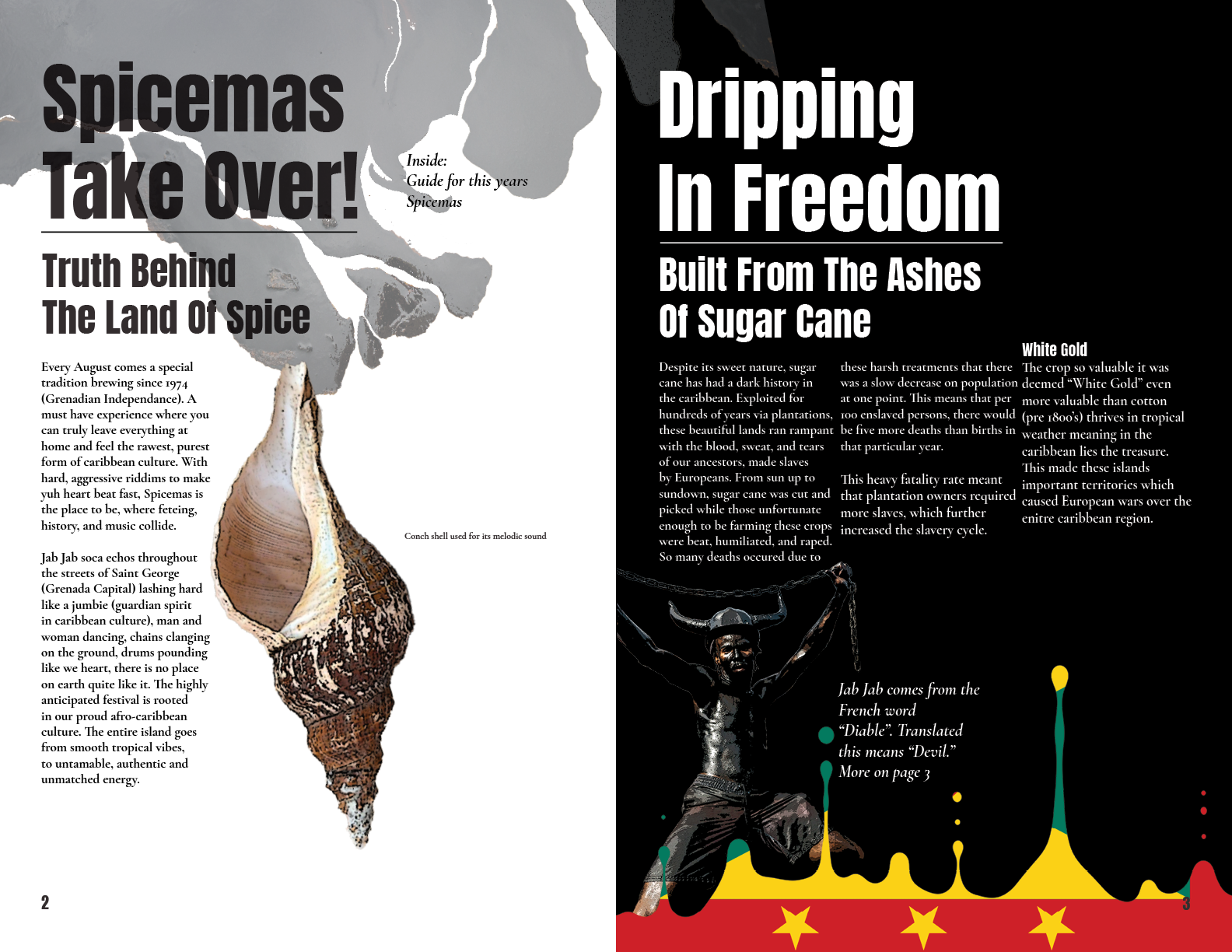
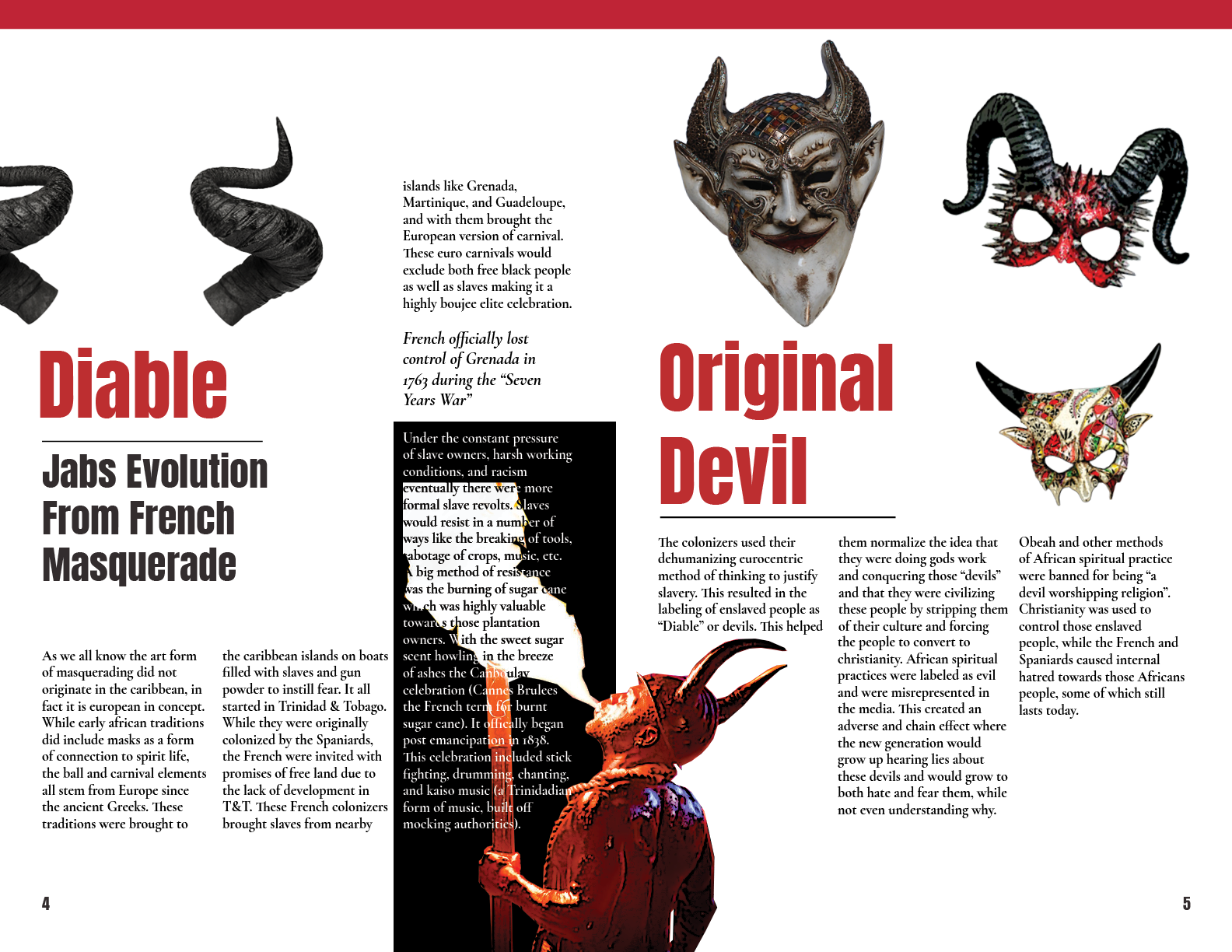
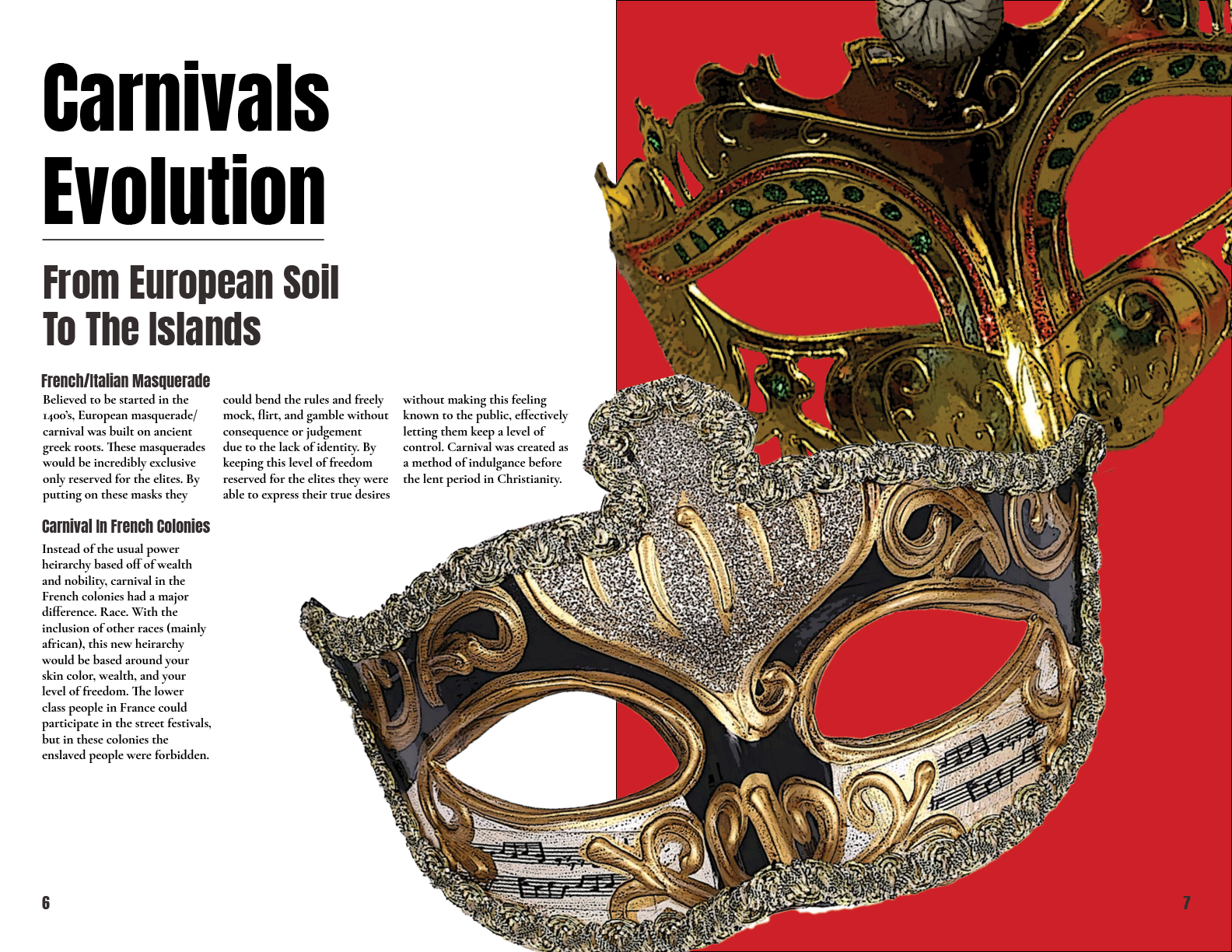
This editorial details the rich history of Jab Jab traditions and how they have evolved over the years. The goal is to destigmatize this tradition from those who claim it is a devil-worshipping festival. By providing knowledge of the triumphs of those who came before us, we have created a successful context for this art form.
Jab Jab is a Caribbean-born tradition spanning centuries, originating in Grenada and Trinidad & Tobago. It is built on a history of slavery and hardship that culminated in music, dance, and wear. Africans were stolen from their homelands and ended up in these islands, and were enslaved. This could not keep their warrior spirits hanging low forever. The French and Spaniards labeled them “Diable” or devils. They instilled racism into these enslaved people, teaching them that the darker they are, the more devilish they are, and that they should hate their skin color. They were no longer human; instead, they were just devils that the white man needed to “correct”, forcing their religions and traditions upon them. Eventually, they were set free after riots and the burning of sugar cane fields, where this tradition was born.
Originally, they poured molasses on their skin to appear as dark as possible to mock those who taught them to hate themselves. They adorned horns to repurpose that devil imagery once dawned upon them. Instead of a sinister meaning, these horns now meant power and strength, reclaiming their own narrative. Eventually, oil replaced molasses, and carnival celebrations filled the streets with conch shells being blown and soca music blasting. This tradition is unapologetically African, and its goal is simply to exist as a force free of its shackles and to celebrate its freedom.